
 My name is Paddy McKeown, I am a retired police officer (Detective Sergeant – Metropolitan Police), turned chimney sweep. I have completed training with ‘The Guild of Master Chimney Sweeps’, and Rod Tech UK (Power Sweeping).
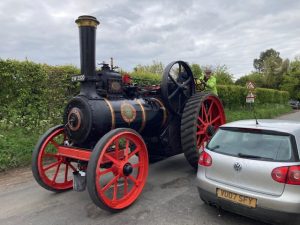
Well, we spent a busy week at work, slowly following one steam engine after another on their way to the Saffron Walden Crank up, wondering whether we were ever going to arrive at the next job and how late we were going to be. But to be honest it didn’t trouble us too much; it was just fantastic to see all those steam beasts back on the road again.
We had a fantastic day at the Crank Up on the Sunday, which was our one day off last week, and we met many of our customers there. Notably we met David Gowlett the blacksmith from Ugley, who was there with his steam tractor Ada. David told us that he had been left Ada in his grandfathers will when he was just 7 years of age. Ada had spent all her working life doing agricultural tasks on the Stetchworth Estate near Newmarket and had worked there prior to the First World War. She eventually ended up in a scrap yard in Saffron Walden where she was rescued for preservation.
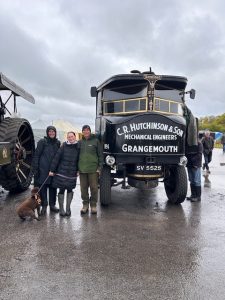
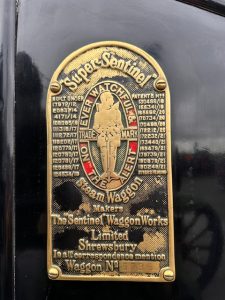
As you can see from the photographs there were two Sentinel Steam Lorries at the show. I took these photos to send to my Uncle Ern up in Liverpool, as he had been evacuated to Shrewsbury to live with three maiden aunts during the Second World War and he can remember clearly the steam lorries trundling out of the Sentinel Works.
As a day out I can highly recommend the Crank Up, along with all the steam vehicles, there were classic cars, lorries and tractors as well as steam organs, steam fairground rides, a beer tent and lots of food outlets. There was one doing particularly good fresh doughnuts. It was only a shame that the weather was so poor, wet and the wind was really whistling across the old Debden Airfield where the show was held.

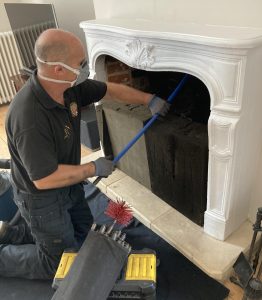
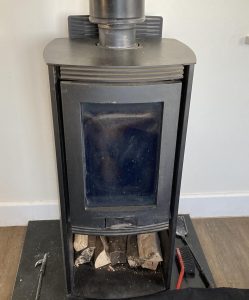
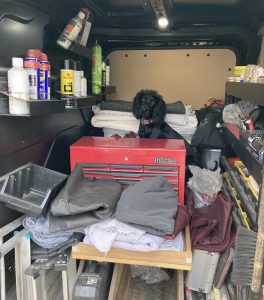 Here we were busy working at an address in Finchingfield doing the chimneys to a couple of large stoves, when we had a cheeky little visitor in the side compartment of the van. This was Poppy the customers little black Cocker Spaniel bitch, presumably on the hunt for some food, Cockers are known to be food obsessed life forms! “Yes, I’m checking out this van, I’m giving it a really good sniffing, but there is no food here”! Poppy is still quite young, not much over a year old, so she is still a pup really and the world is still such an exciting place, so who wouldn’t want to check out something new when it suddenly turns up on your driveway! The customer also have an old Chocolate Brown Labrador called Kato, who was being very well behaved and wasn’t going anywhere near the van and actually looked a bit sheepish, obviously concerned about what naughtiness his younger colleague was getting up to. They both did really make us laugh and brightened the working day.
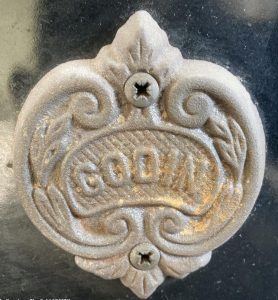
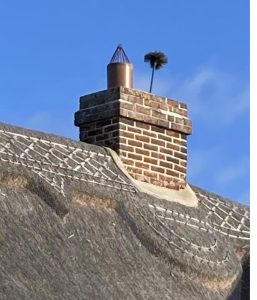
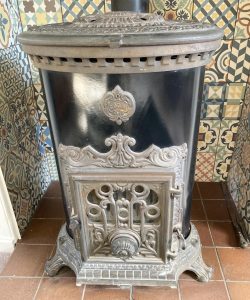 I recently swept this very unusual and attractive tall Petite Godin Stove at an address in Therfield near Royston. These antique stoves are quite a rare find these days, although I have come across one or two of these tall Petite Godin Stoves. I think these antique stoves are rather beautiful and in the right setting they can really add to the ambiance of a room and add value to a property. This stove was an admirable finishing touch to a snug room in an old, thatched cottage. I’m sure its presence means that the snug can be enjoyed by the family all year round! Looking on the internet they really hold their value and are now quite sought after, with a number of websites dealing with their acquisition and sale.