
 My name is Paddy McKeown, I am a retired police officer (Detective Sergeant – Metropolitan Police), turned chimney sweep. I have completed training with ‘The Guild of Master Chimney Sweeps’, and Rod Tech UK (Power Sweeping).
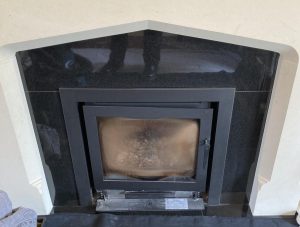
I came across this Stovax Riva 2 323-325 Wood-Burning Inset Stove at an address in Wimbish just the other day. This was the first time I had seen one of these Riva 2’s, like most sweeps I see plenty of the Stovax Riva’s as they are a very popular model of stove and are therefore to be found in many homes that I sweep at across the area. The original Riva’s have a double baffle system, with a lower baffle held up by side pins on either side of the stove and a top baffle held up on two pins in the roof of the stove. I was therefore pleasantly surprised to find that the Riva 2 is much more simply put together, with just one baffle supported on the two vermiculite side bricks, making the Riva 2 much more straight forward to dismantle and clean. A real result. Having said this, its simplicity does not seem to affect its performance, and the customer is more than pleased with the way that it heats the room.
The Stovax Heating Group has been dedicated to the design and manufacture of exceptional stoves, fires and fireplaces for 38 years. Today, we are one of the UK’s leading stove and fireplace manufacturers, exporting to over 25 countries worldwide.
Across our wood burning, multi-fuel, gas and electric products, we strive to create the future of fire. Each of our heating products is the result of decades of expert craftsmanship and class-leading innovation – representing the pinnacle of British engineering.
The Stovax Heating Group is proud to be part of the NIBE Stoves group, a market-leading provider of domestic heating products.
Based in Exeter, England, Stovax Ltd was established in 1981 to design, manufacture and distribute wood burning stoves and fireside accessories. By 1988, the sister company Gazco Ltd was formed to develop and produce gas and electric versions of Stovax stoves.
Today, Stovax and Gazco continue to work very closely together. Each company has constantly developed its product range such that the combined businesses have grown to become one of Europe’s leading manufacturers of stoves, fireplaces and fires, with exports to countries worldwide.
In 2006, Stovax Ltd purchased Yeoman, a long established manufacturer of wood burning stoves that specialised in more rustic, rural styling. The company continues to produce a distinctive and separate range of wood burning, multi-fuel, gas and electric stoves and fires under the Yeoman brand.
Stovax is also the UK and Republic of Ireland distributor for a number of additional fireplaces and stove brands including Dovre, Lotus, Nordpeis & Varde. You can find your nearest retailer in the UK and the Republic of Ireland by using the Find a Retailer tool on this website. For information on distributors in other countries, please contact exportsales@stovax.com.
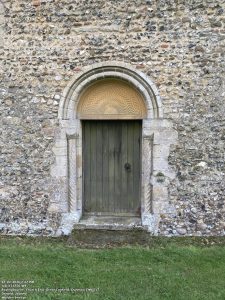
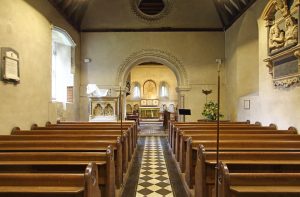
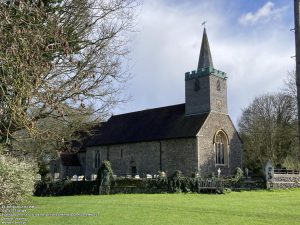
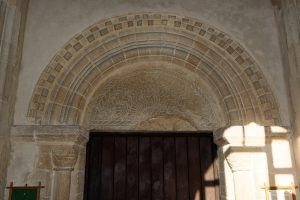 No, on this occasion I was not sweeping for the Bishop of Chelmsford when I visited great Canfield church, but for a private customer who lives in a large house nearby. The thing that strikes you immediately when approaching this small Essex church is its Norman doorways. These Romanesque doorways assist in dating the church back in the past as far as the Norman period. After a walk around the outside of the church examining the flint fabric, I was excited to have a look inside. However, I was quickly disappointed as the church was locked. There were however the details of the Church Warden from whom the key could be obtained. Unfortunately, I had other jobs to do and was somewhat time pressured, so I did not have the time to obtain the key and have a look around. Reading further on the internet, it would appear that I missed a real treat, and I will therefore have to make the time for a return visit when I have more time.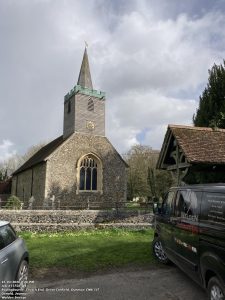
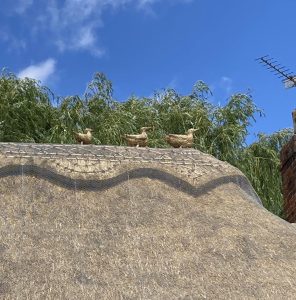 I haven’t posted a picture of any thatched animals we have come across in our work for quite some time now, so here are some thatched ducklings we saw on a recently thatched roof in Ashdon. This is a job we have been doing for a number of years, and each time we have been the thatch looked increasingly tired, until on the last occasion it had a tarpaulin stretched over the rear section to keep the rain out. The new occupiers thought it was high time for some drastic action and had the whole roof entirely rethatched, with remarkable results. I think that you will agree that the thatched ducklings are a pleasing touch. It is an interesting fact that the farm is surrounded by a dried-up medieval moat, so at one time in the past ducklings would have been swimming around the farm. Medieval moats are quite a common feature in this area of Northwest Essex and yet unlike the defensive moats built around castles these moats were decorative statements of wealth constructed by rich landowning families.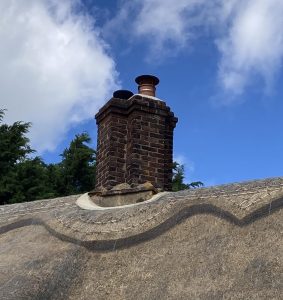
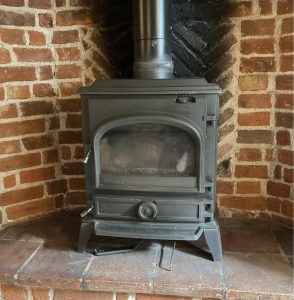
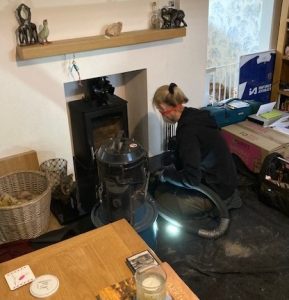
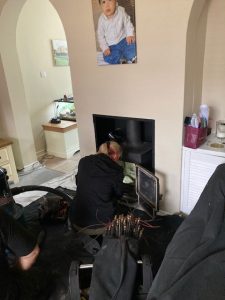
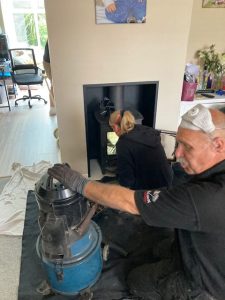
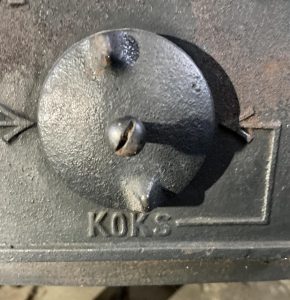
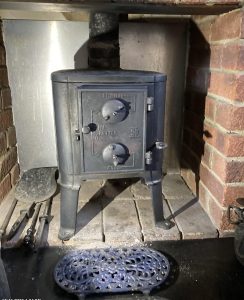 No I definitely haven’t seen anything like this before!! This stove was in a house we swept at this year in Ellsenham, although it is part of a modern installation, I have never come across anything quite like it before. At first I thought it might be an old Jotul model, however searches on the internet have revealed nothing similar. Embosed on the front of the stove are the words: Bryende, Tory, Briketter, Kul and Koks. There is also a logo embossed on the stove which looks like an upside-down letter T with an S scrolling through it. Using Google translate, these words are Norwegian and translate as follows: Bryende (Boiling), Tory (?), Briketter (Briquettes), Kul (Cool) and Koks (Coke). I’m thinking perhaps my original guess at Jotul the Norwegian stove manufacturer was not that far out!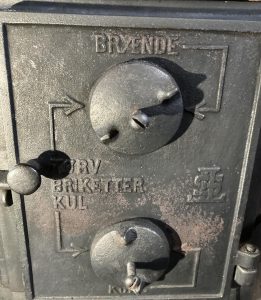
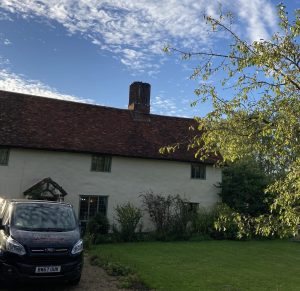 Here we are working at another heritage property, this is Birbecks in Sewards End. It is a Grade II Listed Building: Listing No: 1196236, Date listed: 01 Nov 1972. The property, like many heritage properties in the area, is timber framed and has a beautiful peg tile roof.
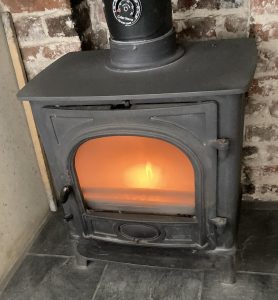
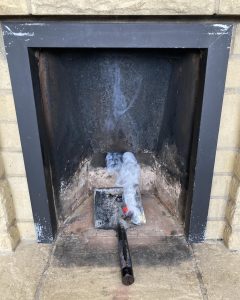
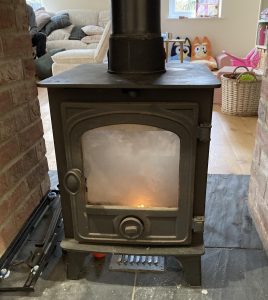
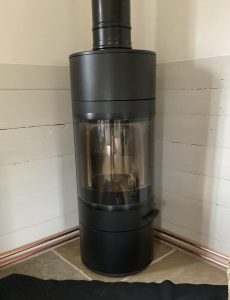 A short time ago I was called to a barn conversion in Finchingfield where the customer was reporting having heard a bird ‘flapping around’ in the stove chimney. The stove turned out to be this rather stylish contemporary Scan 83-1 multi-fuel stove. I dismantled the stove as I would do to sweep any stove, first removing all the supporting fire-bricks to drop the primary vermiculite baffle plate and then removing the secondary baffle which sits just above it. Unfortunately, on top of the secondary baffle was a rather large, dead Jackdaw. By the look of him he has been there a good few weeks. I the customer had called us earlier when they first heard the bird in the chimney then we might have been able to remove him alive. I’m guessing that it was a male bird as he was so large.